
On this page
- 01Short answer: crypto’s legal status in Colombia
- 02How the DIAN classifies crypto (Concepto Unificado 1621)
- 03Occasional gain or ordinary income: the 2-year rule
- 04Swaps, payments, mining, staking and airdrops
- 05Net worth: declaring your crypto as of 31 December
- 06Who must file? Thresholds in UVT and pesos
- 07DIAN deadlines and penalties
- 08CARF: exchanges will report your activity to the DIAN
- 09Form 160 for foreign assets: the gray area
- 10The proposed 5% normalization tax: still a bill
- 11How to trade crypto legally: KYC, source of funds and records
- 12How to declare crypto in Colombia, step by step
- 13Colombia crypto tax calculator
- 14Worked examples
- 15Frequently asked questions
If you bought USDT, bitcoin or any other coin while in Colombia, the question is not whether the DIANColombia's national tax and customs authority. It collects income tax and receives your annual tax return. can tax you, but how much, when and with what paperwork. There is no dedicated Colombia crypto tax law: the DIAN applies the general rules of the Tax Code (Estatuto Tributario) and explains them in its official rulings.
Here they are with peso figures and worked examples, checked on 17 November 2026. It is general information, not tax advice.
Short answer: crypto’s legal status in Colombia
Buying, holding and selling crypto is legal in Colombia, but it is not regulated as a financial product. The state treats it as lawful, taxable and reportable: the DIAN requires you to declare it, the UIAFColombia's financial intelligence unit. It receives suspicious-transaction reports to fight money laundering. receives reports from virtual-asset service providers, and the SupersociedadesThe companies supervisor. It requires anti-money-laundering programs (SAGRILAFT), including for virtual-asset service providers. brought them under its anti-money-laundering rules.
That does not make crypto money. For the Banco de la RepúblicaColombia's central bank. It issues the peso and says crypto is neither legal tender nor a foreign currency. (Concepto 65714 of 10 April 2025) it is not legal tender, not a foreign currency and not a security, and the Superfinanciera (SFC)Colombia's financial supervisor for banks, insurers and pension funds. It does not supervise crypto exchanges. does not supervise exchanges: there is no local license and no deposit insurance. The full picture is in what Colombian law says about crypto.
In short
- Sell or swap crypto you held 2 years or more as a fixed asset: 15% occasional-gains tax.
- Under 2 years, or trading: ordinary income, taxed at 0% to 39%.
- Every crypto-to-crypto swap counts as a sale; moves between your own wallets do not.
- On 31 December you report holdings at tax cost, not market value.
- From tax year 2026, exchanges report their users to the DIAN under CARF.
Paperwork is what counts with the DIAN: an exchange that verifies your identity (KYCKnow Your Customer: the identity check (ID or passport plus a selfie) exchanges require.) ties every purchase to your name, with date and amount.

Buy on an exchange that verifies your identity
A verified account and payment with a Colombian Visa or Mastercard: every purchase is on record in your name, with date and amount.
How the DIAN classifies crypto (Concepto Unificado 1621)
The key document is Concepto Unificado 1621 (filing number 018075) of 17 October 2023, the DIAN’s unified crypto ruling. It binds DIAN officials, you can rely on it, and it revoked all earlier crypto rulings. For tax purposes, crypto and NFTs are intangible assets that form part of your net worth and can generate income.
Concepto 5146 of 31 March 2026 added that there is no legal tax definition of “crypto-asset”, no special valuation basis and no crypto-specific penalty regime: the general rules apply. Under article 60 of the Tax Code, each holding is either a fixed asset (you buy to hold) or a movable asset, similar to inventory (you buy and sell as a regular business).
Occasional gain or ordinary income: the 2-year rule
Tax is triggered by a disposal: any transfer of ownership, whether a sale, a swap or a payment. While you simply hold, price gains are not taxed, and tax is calculated per transaction, on the gain, not on volume.
- Fixed asset held two years or more (article 300 of the Tax Code): Ganancia ocasional (occasional gain)Income-tax category for gains on assets held 2 years or more, taxed at 15%., or occasional gain, taxed at 15% since tax year 2023 (Ley 2277 of 2022). Non-residents also pay 15%.
- Under two years, or sales in the ordinary course of a business: Ordinary incomeThe general income-tax schedule with progressive rates from 0% to 39%. It applies when you sell crypto held under 2 years., or ordinary income, in the general schedule (cédula general), taxed on the progressive article 241 scale.
The DIAN has not said which sub-schedule this income belongs to (non-labor income or capital income), so your accountant decides. Losses only offset income in future years, within the limits of articles 147, 311 and 330.
The scale is set in UVTTax Value Unit used by the DIAN for thresholds and penalties: COP 49,799 in 2025 and COP 52,374 in 2026. (Tax Value Units: COP 49,799 in 2025 and COP 52,374 in 2026). Tax = (base − lower bound) × rate + fixed amount; the peso figures are our own math.
| Taxable net income | In pesos (UVT 2026) | Marginal rate | Fixed amount |
|---|---|---|---|
| Up to 1,090 UVT | up to COP 57,087,660 | 0% | 0 |
| 1,090 to 1,700 UVT | up to COP 89,035,800 | 19% | 0 |
| 1,700 to 4,100 UVT | up to COP 214,733,400 | 28% | 116 UVT |
| 4,100 to 8,670 UVT | up to COP 454,082,580 | 33% | 788 UVT |
| 8,670 to 18,970 UVT | up to COP 993,534,780 | 35% | 2,296 UVT |
| 18,970 to 31,000 UVT | up to COP 1,623,594,000 | 37% | 5,901 UVT |
| Over 31,000 UVT | over COP 1,623,594,000 | 39% | 10,352 UVT |
The scale applies to all your taxable income in the general schedule (salary, fees and other income), not just crypto, so the same gain can be taxed at 0% for one person and 33% for another.
Swaps, payments, mining, staking and airdrops
Exchanging one coin for another is a barter (permuta): each side is deemed to sell what it gives, so every swap is a sale with its own gain or loss, on an exchange or a DEX. Moving coins between your own wallets is not taxed; what you receive as payment, StakingLocking coins to help secure a network in exchange for rewards. It carries lock-up and platform risk., mining or AirdropA free token distribution by a project. Many fake airdrops are scams that drain wallets. is.
| Transaction | Taxable? | How it is valued |
|---|---|---|
| Crypto-to-crypto swap | Yes, it is a sale | Value received minus tax cost |
| Between your own wallets | No | Not applicable |
| Salary paid in crypto | Yes, employment income | Market value when received |
| Payment for goods or services | Yes, income in kind | Market value when received |
| Mining (PoW or PoS) | Yes, provision of services | Market value when received |
| Staking rewards | Yes, income in kind | Market value when received |
| Airdrop | Yes, occasional gain (prize) | Rate not specified by the DIAN |
| Lending interest and DeFi | Yes, yield or income in kind | Market value when received |
An example from the ruling: ETH bought for COP 5,000,000 is swapped for SOL worth COP 8,000,000. That is a COP 3,000,000 gain without touching a peso, and an occasional gain only if the ETH was a fixed asset held two years or more. Gains on crypto futures are taxable too.
VAT and the 4x1000
Selling crypto carries no VAT (IVA in Spanish); exchange fees and mining services do. The 4x1000, Colombia’s 0.4% tax on financial transactions, has no crypto exemption: as we read it, funding an exchange from your bank account may trigger it, although withdrawals from savings accounts are exempt up to 350 UVT a month (COP 18,330,900 in 2026).
Net worth: declaring your crypto as of 31 December
If you are a tax resident and must file, your Declaración de renta (tax return)The annual form in which you report to the DIAN your income, net worth and gains for the previous year. (Form 210) includes the crypto you held on 31 December, in Colombia or abroad. It goes into your Patrimonio (net worth)What you own minus what you owe on 31 December. Crypto is declared there, at cost., or net worth, at tax cost, not market value (article 267), and the form has no dedicated crypto line.
If you bought bitcoin for COP 10,000,000 and it is worth COP 15,000,000 on 31 December, you report it at cost; the increase is not taxed until you sell, swap or spend it.
The DIAN warns that tax cost is not always the purchase price. Fixed assets can have their cost adjusted each year (articles 70 and 868), and if you traded in dollars, exchange-rate differences only count when you sell. If you bought through P2PPeer-to-peer: you buy or sell crypto directly with another person. The platform holds the seller's crypto until the payment is confirmed., support your cost with the “documento soporte” set out in Decreto 1625 of 2016 (article 1.6.1.4.12). And if you file third-party information returns (exógena), check formats 1001, 1007 and 1012 (crypto net worth).
Who must file? Thresholds in UVT and pesos
In the 2026 season, which covered tax year 2025, you had to file if you met at least one of these conditions:
| Condition (tax year 2025) | UVT threshold | In pesos |
|---|---|---|
| Gross assets on 31 December | Over 4,500 UVT | COP 224,096,000 |
| Gross income for the year | 1,400 UVT or more | COP 69,719,000 |
| Credit card spending, purchases or bank deposits (each) | Over 1,400 UVT | COP 69,719,000 |
| VAT-registered on 31 December | No threshold | Always files |
Your crypto counts toward gross assets at tax cost and, as we read it, pesos you receive from an exchange count toward your bank deposits. For tax year 2026, filed in 2027, the thresholds at the 2026 UVT would be roughly COP 235,683,000 and COP 73,323,600 (our math; the DIAN will publish rounded figures).
DIAN deadlines and penalties
The 2026 season ran from 12 August to 26 October 2026, based on the last two digits of your NIT (your tax ID number; for Colombians, usually their cédula or national ID number), ignoring the check digit: NITs ending 01-02 were due on 12 August and 99-00 on 26 October. After the 10 August 2026 earthquake, Decreto 1226 of 2026 set special deadlines in affected areas such as Cali, Pereira and Manizales; we could not confirm those dates. The calendar for tax year 2026 has not been published yet.
- Late filing (article 641): 5% of the tax due per month or part of a month, capped at 100% of the tax; if no tax is due, it is based on income or net worth, with caps. After a formal DIAN summons (emplazamiento), 10%.
- Minimum penalty: 10 UVT, or COP 523,740 in 2026.
- Inaccuracy (article 648): 100% of the difference, and 200% of the additional tax when you omit assets or report liabilities that do not exist.
- Omitted assets: the DIAN can also add them to taxable net income (article 239-1).
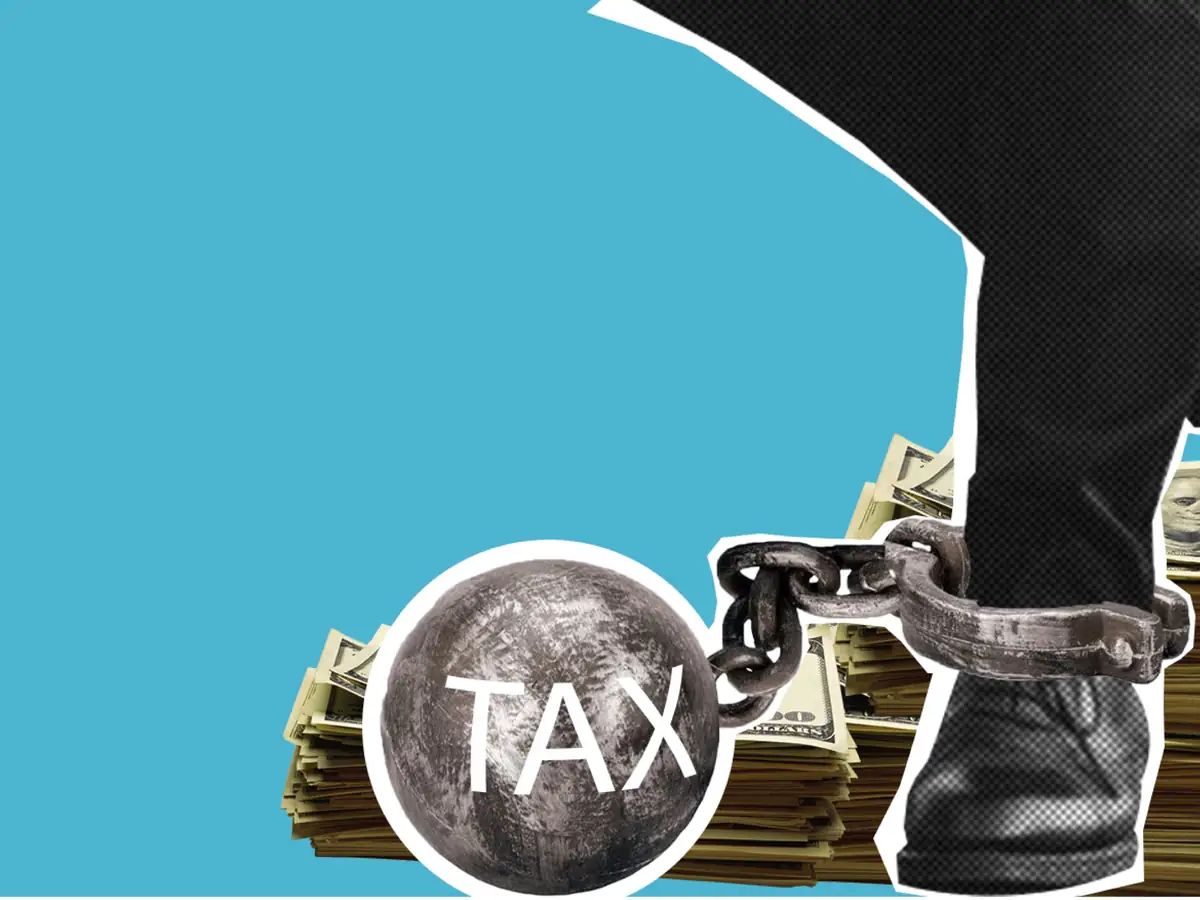
According to CriptoNoticias, in September 2026 the head of the DIAN announced a push against undeclared crypto held abroad.
CARF: exchanges will report your activity to the DIAN
CARFThe OECD framework under which exchanges report clients' crypto transactions to tax authorities. Colombia applies it from tax year 2026. is the OECD standard under which exchanges report their clients’ crypto transactions. Colombia adopted it with DIAN Resolution 000240 of 24 December 2025.
- Who reports: the “reporting crypto-asset service provider”, meaning anyone who facilitates exchange transactions as a business (counterparty, intermediary or platform).
- What is reported: your name, address, tax residence, tax ID, date and place of birth; gross amounts, units and number of transactions per coin; and retail payments over USD 50,000.
- When: from tax year 2026, with each report due by the last business day of May of the following year. The first is due by the last business day of May 2027, usually ahead of the filing season.
Press reports say foreign platforms serving Colombian residents are covered too; we could not verify that in the text. Separately, under Concepto 314 of 2026, providers based or operating in Colombia report their users’ conversions between pesos and crypto from tax year 2026 (exógena format 2856).
Form 160 for foreign assets: the gray area
Form 160, the annual foreign-assets return, is filed by taxpayers whose assets outside Colombia exceed 2,000 UVT on 1 January (COP 104,748,000 in 2026); assets over 3,580 UVT are itemized one by one. It is informational, with no tax to pay, but it carries its own late-filing penalty.
The problem: the DIAN says crypto has no geographic location and is deemed held in Colombia when it is economically exploited here. Its Concepto 4544 of 25 March 2026 applies an effective-location test (issuance, custody and governing law), but no ruling says crypto on a foreign exchange belongs on Form 160. Noticias RCN stated it on 6 August 2026 without citing any rule.
What to do: many advisers treat crypto held by a foreign exchange as a foreign asset. If you are close to 2,000 UVT, get advice and consider filing Form 160 to be safe.
The proposed 5% normalization tax: still a bill
On 29 October 2026 the Ministry of Finance filed the Ley de Rescate Económico (Economic Rescue Law) bill in the House of Representatives, with an urgency request. As of 10 November, rapporteurs were still being appointed, the first joint debate was expected in late November, and ordinary sessions end on 16 December 2026. It is not law.
Its article 71 proposes:
- A voluntary, one-off 5% tax on the market value as of 1 January 2027 of crypto left out of earlier returns, including StablecoinA cryptocurrency designed to hold a fixed value, usually 1 US dollar, such as USDT or USDC., NFTs with economic value and DeFi positions.
- A separate return due by 30 June 2027, disclosing custodians, accounts, public addresses and protocol positions, without having to hand over private keys or Seed phraseThe 12 or 24 words that restore a wallet. Whoever has them controls the funds: never share or photograph them..
- The declared value would become your tax cost.
The bill would also define “crypto-asset”, use weighted-average cost and change the article 241 scale (a 9% band between 720 and 1,090 UVT and 39% above 8,670 UVT). It creates no exchange licenses. Do not plan your filing around that 5% until it passes.
How to trade crypto legally: KYC, source of funds and records
Buying and selling USDT or any other coin is not a crime. Lavado de activos (money laundering)Making illegal money look legitimate. A crime in Colombia (article 323 of the Penal Code), punishable by 10 to 30 years. is (article 323 of the Penal Code), punishable by 10 to 30 years in prison and fines of 1,000 to 50,000 monthly minimum wages. That is why exchanges report to the UIAF every month transactions from USD 150 (or several adding up to USD 450) and, immediately, any suspicious activity.
- Verify your identity on the platform: your verified history is the proof of your cost.
- Pay from accounts in your own name and never lend yours. Banks may refuse crypto-related payments: the Banco de la República described Davivienda rejecting a customer’s crypto purchase under its anti-money-laundering policy.
- Avoid TriangulationA P2P scam: the fraudster pays you with money taken from a third person; the victim reports it and your account is the one that gets frozen.. A scam victim pays through PSEACH Colombia's online payment button that debits money straight from your bank account. or Bre-BThe central bank's instant payment system, live since 6 October 2025: money moves in seconds between banks and wallets using a key., the money lands in your account and you release USDT to a stranger. Confirm the credit in your own bank, not on screenshots, and read how to sell on P2P without falling for it.
If you would rather avoid P2P counterparties, CEX.IO, our top pick, lets you buy with a Colombian Visa or Mastercard after verifying your identity. Its group holds licenses in the US (NMLS 1804170) and a registration in the UK (FCA, FRN 1007192); it has no Colombian license because no such regime exists, it does not accept PSE, Nequi (a popular local wallet app) or Bre-B, and card withdrawals only go to Mastercard.
Your tax records folder
- Bank statements and receipts for every purchase, with date and peso value
- Downloaded history from every exchange and wallet, including fees
- Support document and chat for every P2P purchase
- PSE CUS code or Bre-B reference for every payment
- Hash, network and wallets for every transaction
- Staking, mining or airdrop rewards with their value on the day received
Keep it for years: providers covered by CARF must keep their records for at least five years.

How to declare crypto in Colombia, step by step
To declare crypto or USDT, the process is the same for any coin:
Gather your history
Buys, sales, swaps and rewards from every platform, with dates and peso values.Work out your tax cost
Back it up with bank statements, invoices or a support document.Classify each sale or swap
Occasional gain if it was a fixed asset held two years or more; otherwise ordinary income.Add income received in kind
Staking, mining and crypto payments, at market value when received.Report your net worth
Include your crypto as of 31 December, at tax cost, on Form 210.File on time
Use the deadline set by the last two digits of your NIT.
Colombia crypto tax calculator
The calculator estimates the tax on a single sale or swap. You pick the tax year (2025 or 2026, each with its UVT), enter cost and sale value in pesos, and say whether you held the coin 2 years or more. At 2 years or more it applies 15%; under 2 years it asks for your other taxable income in the general schedule and works out the extra tax the gain adds on the article 241 scale. It shows the gain, the category, the estimated tax rounded to the nearest thousand and the effective rate.
Crypto tax calculator (DIAN estimate)
- Gain
- —
- Category
- —
- Estimated tax
- —
- Effective rate on the gain
- —
Loss: no tax on this transaction (losses only offset income under special rules).
Simplified estimate: it ignores deductions, exempt income, advance payments and cost-basis adjustments. Speak to an accountant before you file.
With the default values (cost COP 10,000,000, sale COP 16,000,000) and 2 years or more, the tax is COP 900,000. Under 2 years with COP 40,000,000 of other income, it comes out at zero: the whole base stays below 1,090 UVT.
Worked examples
Simplified math, with no deductions or cost adjustments.
Example 1: bitcoin held for more than 2 years
A resident bought bitcoin for COP 20,000,000 in January 2023, held it as a fixed asset and sold it in March 2026 for COP 38,000,000. Occasional gain: COP 18,000,000. Tax at 15%: COP 2,700,000, reported in the tax-year 2026 return filed in 2027. The annual cost adjustment could reduce it.
Example 2: the same gain in 10 months
Held for only 10 months, the COP 18,000,000 would be ordinary income. With COP 86,748,000 of other taxable income, the general schedule reaches 2,000 UVT (COP 104,748,000) and its tax is (2,000 − 1,700) × 28% + 116 = 200 UVT: COP 10,474,800. Without the crypto it would be about COP 5,635,000, so the sale adds roughly COP 4,839,000: 26.9% of the gain, versus 15% in example 1.
Example 3: filing 2 months late
A tax-year 2025 return with COP 2,700,000 of tax due, filed two months late and before any DIAN summons: 5% × 2 × 2,700,000 = COP 270,000. Because that is below the minimum penalty, you pay COP 523,740 (10 UVT in 2026), before any reductions under article 640.
Frequently asked questions
01 Do I pay tax if I do not sell?
Not on price gains: while you just hold, a rise in value is not taxed. But if you must file, you include your crypto in your net worth as of 31 December at tax cost. And swapping one coin for another, paying with crypto or receiving staking or mining rewards is taxable, even if you never touch pesos.
02 Is swapping USDT for BTC taxable?
Yes. The DIAN treats it as a barter (permuta): each side is deemed to sell what it gives, so you are effectively selling your USDT. The gain is the value of what you receive minus the tax cost of what you gave. It is only an occasional gain if you held that USDT for two years or more as a fixed asset.
03 What is the crypto tax rate in Colombia?
If you sell or swap crypto you held for two years or more as a fixed asset, you pay 15% occasional-gains tax. If you held it for less or you trade, the gain is added to your ordinary income and taxed on the article 241 scale, from 0% to 39% depending on your income. Selling crypto carries no VAT.
04 Does Binance report to the DIAN?
Under Resolution 000240 of 2025 (CARF), reporting crypto-asset service providers must send the DIAN their users' data from tax year 2026; the first report is due by the last business day of May 2027. Press reports say foreign platforms serving residents are included, which we could not confirm in the text. The safe assumption is that the DIAN will see your activity.
05 What if I never declared my crypto?
Omitting assets can trigger an inaccuracy penalty of up to 200% of the additional tax, and the DIAN can add omitted assets to your taxable income. CARF reporting will make this easier to detect. The Ley de Rescate Económico bill proposes a voluntary 5% normalization, but it is not law. An accountant can check whether you should correct past returns.
06 Do foreigners pay tax on crypto in Colombia?
It depends on tax residency. If you spend more than 183 days in Colombia, in one stretch or several, within any 365-day period, you are a resident and taxed on worldwide income, crypto included. Non-residents are taxed only on Colombian-source income, such as crypto converted into pesos or spent on goods and services in Colombia.
Sources
Facts checked against official sources onNovember 17, 2026.
- DIAN — Concepto Unificado 1621 (018075) of 2023 on crypto-assets
- DIAN — Concepto 5146 of 2026 (nature and valuation of crypto-assets)
- DIAN — Concepto 314 (003546) of 2026 on third-party information reporting
- Ley 2277 of 2022 (occasional-gains tax rate)
- DIAN Resolution 000240 of 2025 (CARF)
- DIAN — Annual foreign-assets return (Form 160)
- INCP — 2026 income tax deadlines and thresholds
- Holland & Knight — Colombia's Economic Rescue Law bill