
On this page
- 01Quick setup checklist for your first weeks
- 02Best crypto exchange in Medellín for expats: what works with a passport
- 03Banking in Colombia as a foreigner: cédula de extranjería, Nu and fintechs
- 04Getting pesos: P2P, cards and ATMs
- 05Colombia digital nomad visa: the income test and crypto
- 06The 183-day rule: tax residency and your crypto
- 07Medellín and Bogotá: communities, meetups and events
- 08Staying safe: dating apps, scopolamine and visible balances
- 09Frequently asked questions
Moving to Medellín or Bogotá with a laptop and a crypto portfolio is easy. Turning that crypto into rent money, staying on the right side of the tax office and not becoming a target takes a bit more planning. This guide to crypto for expats in Colombia covers what actually differs for foreigners: which exchanges accept you, how to get a local account to receive pesos, what the digital nomad visa asks for, and when the DIANColombia's national tax and customs authority. It collects income tax and receives your annual tax return. starts counting your coins.
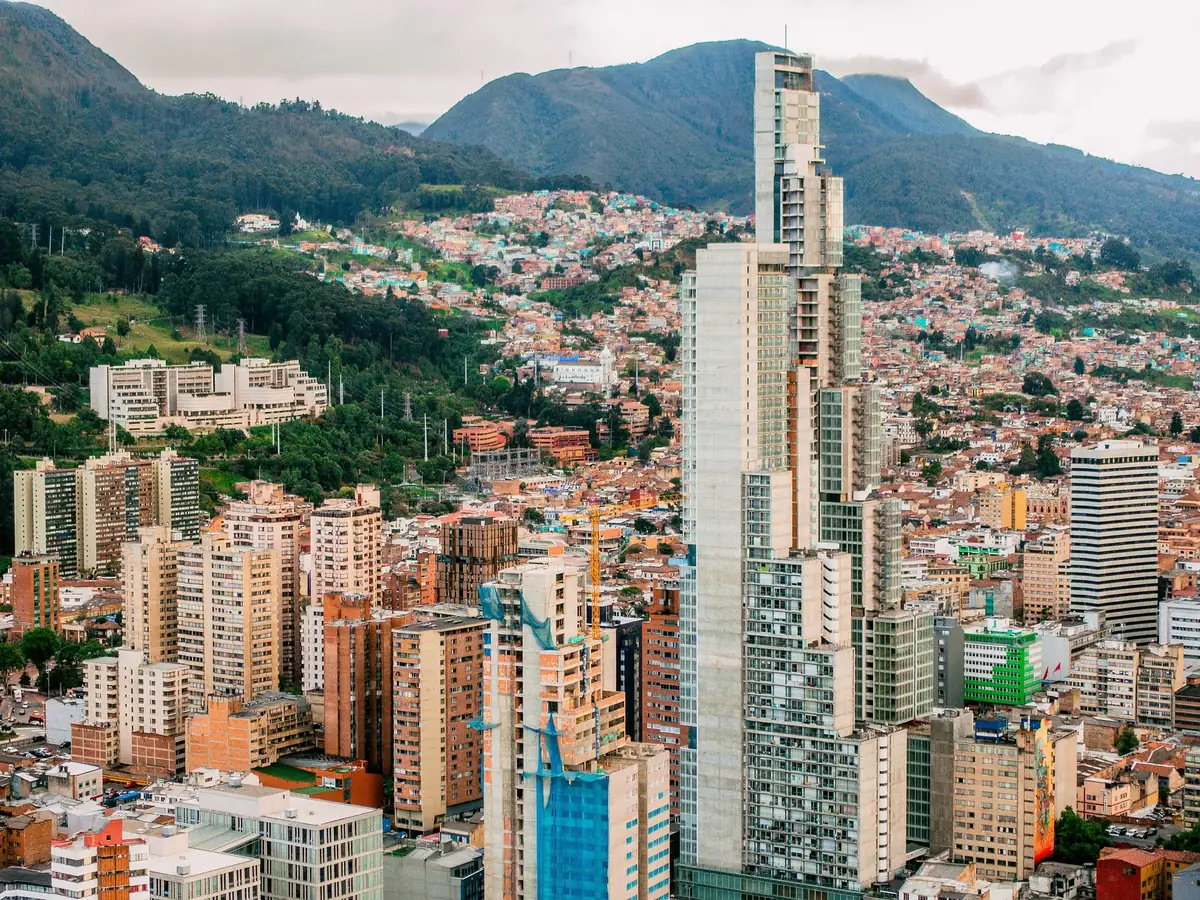
Medellín and Bogotá are where most of Colombia’s crypto life happens. On BTC Map, the community map of places that accept bitcoin, we counted about 117 listings within 10 km of central Medellín and about 33 within 15 km of central Bogotá on November 17, 2026. We checked every figure on this page against official sources and each platform’s own pages on that same date.
In short
- Buying and selling crypto is legal for foreigners, but Wenia only accepts Colombian citizens.
- Receiving pesos almost always requires a Colombian account in your name, and most banks ask for a cédula de extranjería.
- The digital nomad visa requires income of at least three minimum wages: COP 5,252,715 a month in 2026.
- More than 183 days in Colombia within any 365-day period makes you a tax resident who declares crypto held anywhere.
- Scopolamine robberies in Medellín went from 275 to 556 cases: never show balances and keep a small spending wallet.
Quick setup checklist for your first weeks
Before you move money, sort out three things: your immigration status, your accounts and your security. Many newcomers trip over one of these, for example arriving with no way to turn crypto into pesos, or leaving two-factor codes tied to a phone number they are about to stop using.
Before your first purchase in Colombia
- Know your status: tourist on an entry permit, or a visa such as the digital nomad visa.
- Open and verify an account on an international exchange that serves users in Colombia, ideally before you fly.
- Move your two-factor authentication (2FA) to an authenticator app: you will swap SIM cards and SMS codes fail.
- Get a Colombian phone number: digital banks such as Nu ask for one.
- Track your days in the country from the entry date stamped in your passport.
- Keep a small wallet for spending and store the rest off your phone.
- Write your seed phrase (the 12 or 24 words that restore a wallet) on paper and keep it away from your passport.
If you don’t have a Colombian account yet, that’s fine: you can start by buying with your card on an international exchange and solve the peso side later. Security is the part you cannot postpone, because foreigners’ crypto accounts are a known target for gangs working through dating apps.
Best crypto exchange in Medellín for expats: what works with a passport
Every serious platform requires KYCKnow Your Customer: the identity check (ID or passport plus a selfie) exchanges require., an identity check with an ID document and a selfie. As a foreigner you will usually present your passport or your cédula de extranjería. What we could not confirm is the exact list of documents each exchange accepts for each nationality, so read its help center before you deposit. Here is what is verified:
| Platform | Open to foreigners? | How pesos come in | Watch out for |
|---|---|---|---|
| CEX.IO | Yes, users in Colombia with standard KYC | Visa or Mastercard; no COP balance | US served by another entity; Canada, Venezuela unsupported |
| Binance | Accepted IDs not confirmed | Bre-B, PSE and P2P from a Colombian account | No entity or office in Colombia |
| Kraken | Accepted IDs not confirmed | Colombian banks; converted to dollars | No peso balance |
| Bitso | Accepted IDs not confirmed | Only from Nequi or Bancolombia | No PSE, no BTC/COP pair |
| Wenia | No: Colombian citizens only | Bancolombia, Nequi or a Colombian card | Rejects passports and cédula de extranjería |
CEX.IO is our top pick for new arrivals for a practical reason: you don’t need a Colombian account. Colombia is not on its list of unsupported countries (updated September 10, 2026), you pay with a Visa or Mastercard, and your bank converts the currency. Card deposits cost 0.49% to 4.99% plus the provider’s charge, spot trading costs 0.25% at the entry tier, and new accounts are capped at USD 1,000 a day and USD 3,000 a month for the first three months. Customers in Colombia contract with CEX OVRS LLC (Nevis); the group is registered with FinCEN in the US (NMLS 1804170) and with the FCA in the UK (FRN 1007192). It has no Colombian license because no such regime exists.
Its limits are just as clear. There is no peso balance and no PSEACH Colombia's online payment button that debits money straight from your bank account., NequiGrupo Cibest's (Bancolombia) money app. Since 1 September 2026 it operates as Nequi S.A. Compañía de Financiamiento, supervised by the Superfinanciera. Its low-amount accounts have caps on balance and movements. or Bre-BThe central bank's instant payment system, live since 6 October 2025: money moves in seconds between banks and wallets using a key.; withdrawals to Visa cards are not available for Colombia (Mastercard works, within about an hour); and the CEX.IO Card has been paused since February 3, 2026. One more point that depends on your passport: its unsupported list includes Canada and Venezuela, and its rest-of-world terms exclude the United States, which is served by a separate group company (CEX.IO Corp). If you’re American or Canadian, ask support which entity applies to you before you sign up.
Binance is the biggest peso market: the only USDT/COP spot pair on a global exchange, deposits and withdrawals through Bre-B, Colombia’s instant payment system, since February 2026, and the deepest P2PPeer-to-peer: you buy or sell crypto directly with another person. The platform holds the seller's crypto until the payment is confirmed. market in the country. The problem for foreigners is that nearly all of it needs a Colombian bank account or wallet in your name. Binance has no entity or office in Colombia and pleaded guilty in the US in 2023, paying USD 4.3 billion.
Kraken can work if you already used it at home: since December 4, 2025 it accepts peso deposits from Colombian banks, auto-converted to dollars, and near-instant COP withdrawals. It holds a MiCA license, issued under the European Union’s crypto rulebook. Wenia, Grupo Bancolombia’s platform, is not an option: it only accepts adult Colombian citizens with a physical cédula de ciudadanía and an address in Colombia.
Buy your first crypto without a Colombian account
Verify your identity, pay with your Visa or Mastercard and let your bank handle the conversion.
Banking in Colombia as a foreigner: cédula de extranjería, Nu and fintechs
To sell crypto and receive pesos you almost always need a Colombian account in your own name. That is the bottleneck for most expats.
Bancolombia publishes concrete requirements: a foreign employee, self-employed person, student or investor can open a savings account with a visa, passport or temporary Cédula de extranjeríaThe ID card for foreign residents in Colombia. Many banks require it to open an account. (the foreign resident ID card), plus a second photo ID and an employment or study letter. Venezuelans can use their PPT, the temporary protection permit. Note that the receipt you get while your cédula is being processed (the “contraseña”) does not count.
In practice, most banks ask for the cédula de extranjería, which is issued to holders of visas longer than three months, not to tourists. Third-party guides say Nu Colombia requires a valid cédula de extranjería (or a Colombian ID) and a Colombian phone number; we found no crypto product inside Nu. Whether Nequi or DaviPlata (Davivienda’s mobile wallet) accept a cédula de extranjería or a PPT we could not confirm, as reports vary. What is in writing is that DaviPlata’s higher-limit upgrade (“Aumento de Tope”) requires an adult Colombian.
If you do get Nequi, remember the default account is a Low-amount deposit accountA simplified account (such as Nequi or DaviPlata): the balance cannot exceed 210.5 UVT and neither can monthly outflows. In 2026 that is COP 11,024,727.: balance and monthly outflows cannot exceed COP 11,024,727 in 2026. You can switch to a savings account with no cap for a one-time fee of COP 15,000. And every time money leaves a bank account you pay the 4x1000 (GMF)Financial transactions tax: 4 pesos per 1,000 withdrawn or transferred from an account. Withdrawals from savings accounts are exempt up to 350 UVT a month (COP 18,330,900 in 2026). tax, except within the savings-account exemption (up to COP 18,330,900 a month in 2026).
While you sort out a bank, some Colombian apps hold balances in digital dollars. Littio offers a USDC balance with free top-ups by Bre-B, PSE or Nequi above 20 USDC. Lulo X, inside the Lulo Bank app, lets you buy USDC, euros and BTC: Lulo Bank is supervised by the Superfinanciera (SFC)Colombia's financial supervisor for banks, insurers and pension funds. It does not supervise crypto exchanges., Lulo X is not. Global66, supervised as a SEDPE (a specialized electronic payments company), lets you send StablecoinA cryptocurrency designed to hold a fixed value, usually 1 US dollar, such as USDT or USDC.. We could not confirm whether any of them accepts foreigners without a Colombian ID, so check their requirements before you count on them.
Getting pesos: P2P, cards and ATMs
Living on crypto in Colombia mostly means converting to pesos: rent, groceries and rides are paid in COP, and very few businesses take bitcoin. You have four routes, each with its own cost.
Selling on P2P
P2P is the most common route: you sell your USDT to another person and the pesos land in your bank account or Nequi. Among the top 100 USDT ads on Binance, Bre-B keys, Nequi and Bancolombia dominate, so no Colombian account means no P2P. On November 17, 2026, with the official TRMThe official daily dollar-to-peso reference rate, certified by the Superfinanciera. rate at COP 3,316.70, USDT buyers on Binance P2P were paying between COP 3,245 and 3,262: selling left you 1.6% to 2.2% below the official dollar.
The main risk is TriangulationA P2P scam: the fraudster pays you with money taken from a third person; the victim reports it and your account is the one that gets frozen.: someone pays you with money stolen from a third person, the victim files a complaint, and your account is the one that gets frozen. Sell only to verified counterparties, confirm the payment in your own banking app, and refuse transfers from a name that doesn’t match the buyer’s.
Cards
Your foreign card works at Colombian bank ATMs for cash; fees are set by your bank and the ATM owner, so compare them before you travel. If you already hold a Colombian Mastercard, CEX.IO can withdraw to it within about an hour. Crypto cards are another story: the CEX.IO Card stopped working on February 3, 2026, the Wenia Card depends on a Wenia account (closed to foreigners), and we could not confirm the Binance Card’s current terms for Colombia after June 1, 2026.
Bitcoin ATMs
There are few: a few dozen at most nationwide, mostly in Bogotá. When we checked Coin ATM Radar, its Colombia and Medellín listings contradicted each other and some Bogotá machines were flagged as not working. Confirm a machine is active before you go, check the fee on screen, and don’t withdraw large amounts at night or alone.
Cashing out through an exchange
With a Colombian account in your name, the cleanest route is to sell on an exchange and withdraw: Binance pays out instantly through Bre-B, Bitso withdraws free to any Colombian bank, and Kraken debits COP withdrawals from your dollar balance. It’s slower than P2P for small amounts, but you avoid receiving money from strangers.
Colombia digital nomad visa: the income test and crypto
The digital nomad visa (Visa V Nómadas digitales) sits in article 46 of Resolution 5477 of 2022 from Colombia’s Foreign Ministry and has been in force since October 21, 2022. It lets you stay up to two years working remotely for companies or clients outside Colombia. The requirements that matter:
- Income: bank statements from the last three months showing income of at least three SMMLVColombia's legal monthly minimum wage: COP 1,750,905 in 2026. It is used, for example, for the digital nomad visa income test.. With the 2026 minimum wage (COP 1,750,905), that is COP 5,252,715 a month, roughly US$1,584 at the TRM valid from November 14 to 17, 2026.
- Health insurance valid anywhere in Colombia.
- Restriction: you cannot work for, or be paid by, people or companies based in Colombia.
- Duration: up to two years.
What if you’re paid in crypto? The rule refers to bank statements, and we found no provision accepting an exchange statement as proof of income. If your clients pay you in USDT or USDC, the prudent move is to run that income through a bank account in your name for at least three months before applying. And because the threshold is set in pesos, its dollar value moves with the exchange rate: on August 22, 2026, when the TRM hit its low for the year (COP 3,048.12), you needed about US$1,723.

If your country is visa-exempt, you can also enter as a digital nomad on an entry permit of 90 days, extendable to 180. Between October 1, 2022 and April 11, 2023, the Foreign Ministry issued 376 digital nomad visas, led by US and Canadian citizens; we found no newer official count. Some law firms report more rejections since late 2025, and we could not confirm the visa fees quoted on blogs with the ministry. One more detail: the 2026 minimum wage faces pending legal challenges before the Consejo de Estado, though it remains in force.
The 183-day rule: tax residency and your crypto
For the DIAN, your visa doesn’t decide your tax status; your days do. Under article 10 of Colombia’s tax code, you are a tax resident if you spend more than 183 calendar days in Colombia, in one stretch or several, within any 365-day period, counting the days you arrive and leave. If you arrived on February 1, 2026 and haven’t left, you crossed the line on August 3, 2026.
The difference is big:
- As a resident, you are taxed on worldwide income and you declare your worldwide net worth, including crypto wherever it sits: on a foreign exchange, in a self-custody wallet or back home.
- As a non-resident, you are taxed only on Colombian-source income. But the DIAN treats crypto as “held in Colombia” when you convert it to pesos here or use it to pay for goods and services in the country.
Residents follow the same rules as any Colombian. Crypto is an intangible asset: if you sell it or swap it after holding it two years or more as a fixed asset, the gain is taxed at 15% as Ganancia ocasional (occasional gain)Income-tax category for gains on assets held 2 years or more, taxed at 15%.; if you held it for less, or you trade frequently, it falls into Ordinary incomeThe general income-tax schedule with progressive rates from 0% to 39%. It applies when you sell crypto held under 2 years. with rates from 0% to 39%. That matters if you’re a crypto trader in Colombia: every coin-to-coin swap counts as a sale, while moving coins between your own wallets does not. If you’re paid in crypto, that income is valued at the market price on the day you receive it.
In the 2026 filing season (tax year 2025), you had to file if, among other tests, your gross net worth exceeded COP 224,096,000 or your income reached COP 69,719,000, with deadlines between August 12 and October 26, 2026. The nomad visa grants no exemption, and if your home country has a double tax treaty with Colombia the outcome may change, which an accountant has to check case by case. From tax year 2026, exchanges also report their users to the DIAN under the OECD’s CARFThe OECD framework under which exchanges report clients' crypto transactions to tax authorities. Colombia applies it from tax year 2026. standard, with the first report due by the last business day of May 2027. Our guide to crypto taxes in Colombia has the details and a calculator.
Medellín and Bogotá: communities, meetups and events
If you want to meet crypto people without exposing yourself, start with public events that have a track record.
Medellín has more places that accept bitcoin than any other Colombian city: the 117 BTC Map listings within 10 km of the center (91 verified in the last 12 months) include parts of Envigado, Sabaneta and Itagüí, and Guatapé adds another 18. On Meetup.com you’ll find the Medellín Bitcoin Meetup, held monthly with about 219 members and rotating venues, and Medellín BitDevs, a Socratic seminar for technical folks. Colombia Blockchain Week runs on December 11 and 12, 2026 at the InterContinental hotel in El Poblado, with more than 1,500 attendees expected, and the Bitcoin Medellín conference held its second edition on January 16 and 17, 2026 at Plaza Mayor. For the practical side of the city, see our Medellín crypto guide.
Bogotá hosts the big events. The ninth Cripto Latin Fest took place on August 27 and 28, 2026 at Maloka, and its organizers announced that the tenth edition will be renamed Digital Latin Fest, with no dates confirmed as of November 17, 2026. Blockchain Summit Latam was held in Bogotá from November 4 to 6, 2026 (some calendars list November 5 and 6). BTC Map shows about 33 places within 15 km of the center and a community called Satoshi Team Bogotá, organized on Telegram.
Whether you live in El Poblado, Laureles or Chapinero, keep one simple rule: meet people at the event, not at your apartment, and never say how much you hold.
Show up to the next meetup with your account ready
Open your account, verify your identity from your phone and make a small purchase with your card.
Staying safe: dating apps, scopolamine and visible balances
This is the section that matters most. In Medellín, robberies involving Scopolamine (burundanga)A drug criminals use to leave victims compliant and empty their accounts, often after dating-app meetings. rose from 275 to 556 cases (up 102%) in the 2026-versus-2025 comparison the mayor’s office gave El País on October 19, 2026; contact with victims typically starts on social media and dating apps. The US Embassy warned on January 10, 2024 that 8 US citizens died in Medellín in November and December 2023, several in cases tied to dating apps. The UK government warns that the drug is given through drinks, food, cigarettes, aerosols and even paper flyers.
Some gangs go straight for the crypto. “Los Criptocitas,” broken up in September 2024, set up fake profiles to lure foreigners who traded crypto, drugged them, and used their fingerprints to open their apps and drain the funds into six anonymous wallets. In Envigado in January 2024, a businessman invited to a supposed “crypto investment” meeting was held for 24 hours and forced to send US$184,000 in crypto.
Rules that actually protect you
- Never show balances or say how much you hold, not even at a bar or a meetup.
- Keep only a small spending wallet on your phone; savings go in a cold wallet kept at home.
- Lock exchange apps with a PIN or password, not with your fingerprint or face.
- First dates always in busy public places.
- Use 2FA through an app, not SMS, and never share your seed phrase with anyone.
- If you're robbed, don't resist: your life is worth more than your balance.
Every time you send crypto, apply the basics: the sending and receiving networks must match (TRC-20 to TRC-20), copy and paste the address and check its first and last characters, and send a small test amount first. Three minutes of checking prevents the most avoidable losses.
Frequently asked questions
01 Can foreigners buy crypto in Colombia?
Yes. No law prohibits it: crypto is legal in Colombia, though unregulated. What changes is access. You need an exchange that accepts your ID and your country of residence and, to receive pesos, almost always a Colombian account in your own name. Until you have one, you can buy with your Visa or Mastercard on an international exchange such as CEX.IO, which serves users in Colombia with standard identity verification.
02 Which exchange is best for expats in Medellín?
To get started without a Colombian account, our top pick is CEX.IO: you buy with a card and your bank handles the conversion. Once you have a Colombian bank account, Binance (Bre-B and P2P), Bitso (free withdrawals to Colombian banks) or Kraken (peso deposits converted to dollars) can take you back to pesos, provided they accept your ID. Wenia is not an option. Americans and Canadians should first ask CEX.IO support which entity applies to them.
03 Do I pay tax in Colombia on my crypto?
It depends on your days in the country. Spend more than 183 days within any 365-day period and you become a tax resident taxed on worldwide income, crypto included: 15% as ganancia ocasional on coins held two years or more, or ordinary income rates from 0% to 39% if held for less. Non-residents only pay on Colombian-source income, which includes crypto you convert to pesos or spend in Colombia.
04 Can I use Wenia without a cédula?
No. Wenia, the crypto platform of Grupo Bancolombia, only accepts adult Colombian citizens with a physical cédula de ciudadanía and a residential address in Colombia. It does not accept passports, a cédula de extranjería or any other foreign ID. As a foreigner, your options are an international exchange such as CEX.IO for card purchases, or Binance, Bitso and Kraken for pesos once you have a Colombian bank account and have confirmed they accept your ID.
05 Can I open a Colombian bank account with a passport?
Sometimes. Bancolombia lets foreign employees, self-employed people, students and investors open a savings account with a visa, passport or temporary cédula de extranjería, plus a second photo ID and an employment or study letter. Venezuelans can use the PPT permit. In practice, most banks and Nu Colombia ask for a cédula de extranjería, which is not issued to tourists.
06 How much do I need to earn for the Colombia digital nomad visa?
At least three Colombian minimum wages a month, shown on bank statements from the last three months. In 2026 that is COP 5,252,715 a month, about US$1,584 at the official rate valid from November 14 to 17, 2026. You also need health insurance valid across Colombia, and you cannot work for or be paid by people or companies based in Colombia. The visa is granted for up to two years.
Sources
Facts checked against official sources onNovember 17, 2026.
- Colombian Foreign Ministry — Resolution 5477 of 2022 (digital nomad visa, article 46)
- DIAN — Are you a tax resident in Colombia?
- DIAN — Unified Ruling 1621 (018075) of 2023 on crypto assets
- Wenia — Who can open an account
- Bancolombia — Requirements for foreigners opening an account
- CEX.IO — Countries and territories not supported (September 10, 2026)
- CEX.IO — Limits and commissions
- El País — Scopolamine robberies up 102% in Medellín (October 19, 2026)
- UK Government — Colombia travel advice: safety and security